The Sugar Club

Details
- Date
- October 02, 2026
- Venue
- The Sugar Club Dublin, Ireland (Saint Kevin’s)
- Billed As
- Robyn Hitchcock
- Gig Type
- Concert
- Guests
- Rick Lollar and Emma Swift
Set List
- Tonight
- Raymond Chandler Evening
- My Wife and My Dead Wife
- I Often Dream of Trains
- The Shuffle Man
- Wasted
- Century
- Chinese Bones
- Wax Doll
- The Yip Song with Emma
- Ride with Emma
- Glass Hotel with Emma
- So You Think You're in Love with Emma
- Queen of Eyes with Emma and Rick
- A Globe of Frogs with Rick Lollar
- I Am This Thing with Rick Lollar
- My Dead Astronaut with Rick Lollar
- I Wanna Destroy You with Rick Lollar
- I'm Waiting for the Man Velvet Underground with Rick Lollar
Encore
- See Emily Play Pink Floyd with Rick Lollar
- The Wind Cries Mary The Jimi Hendrix Experience with Rick Lollar
- A Day in the Life The Beatles
Reviews
Online review by Spectrum Culture
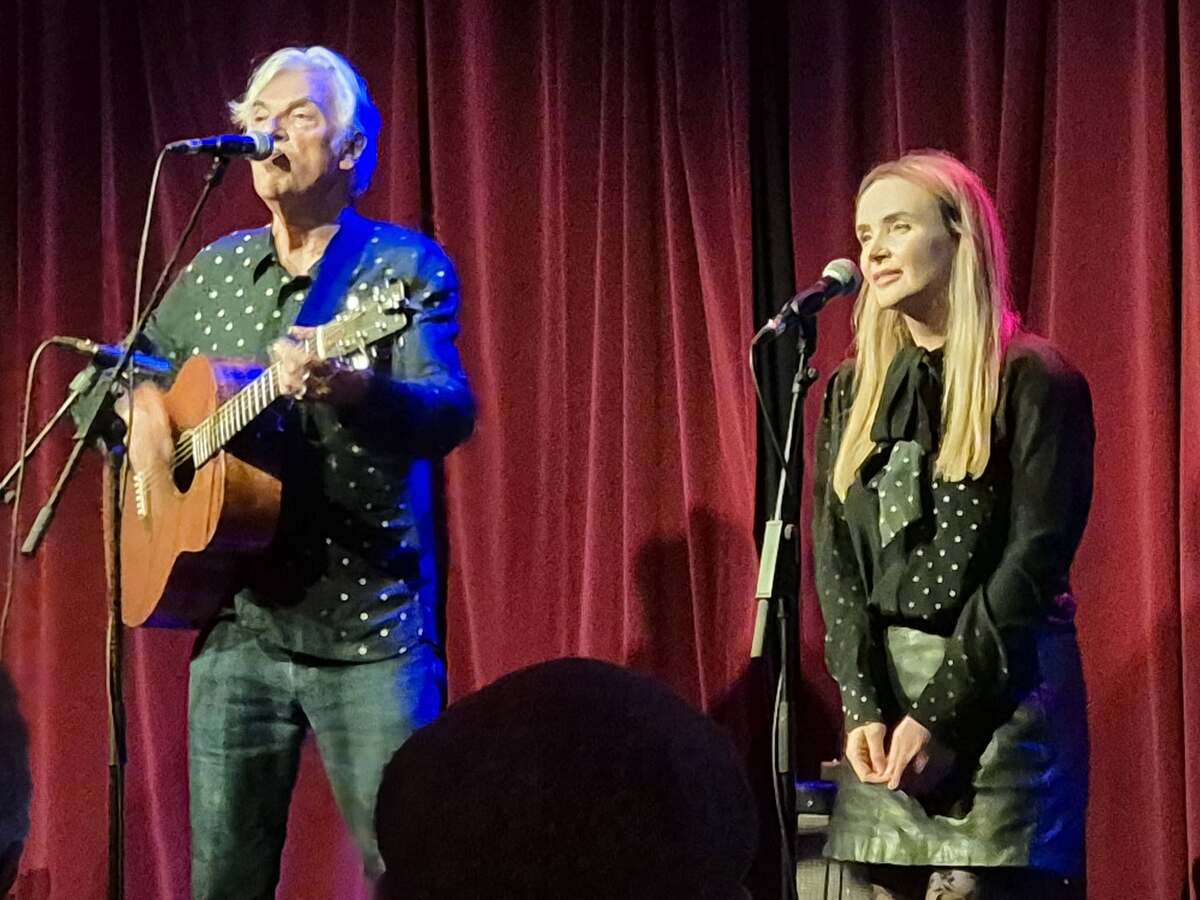
If he should ever decide to quit rock music, it’s fair to say Robyn Hitchcock could make a hefty sum of cash for himself as a comedian. At the Sugar Club, he delivered quips and jokes between tracks, even acknowledging his English passport in a room full of Dubliners: “I’m not from these parts; I’m not even from Kilkenny …” He sang most of the set entirely alone, although he was joined by Australian singer Emma Swift for part of the set, and guitarist Rick Lollar for another.
Swift and Lollar also served as the opening act. Their set climaxed with a startling version of “Visions of Johanna,” the duo brought a new pathos to Bob Dylan’s epic; a herculean ballad bolstered by jazz fills and vocal leaps. Immersed in the moment, Swift gently performed “The Resurrection Game,” safe in the knowledge that the words were powerful enough to move the audience nearly to tears. She returned to the stage later in the night, harmonizing with the main act, her voice acting as an enlivening contrast with Hitchcock’s more sedate vocal style.
When he arrived onstage, it was with little fuss or fanfare; Hitchcock merely walked on with a guitar. His nonchalant behavior was charming; an elderly musician excited by the crowd in front of him. As a means of audience participation during the encore, Hitchcock encouraged the crowd to sing the orchestral parts from “A Day in the Life,” as he replicated John Lennon’s verses on a wooden guitar. Other covers during the night included Pink Floyd’s psychedelic “See Emily Play” and Jimi Hendrix’s yearning blues ballad “The Wind Cries Mary” — Lollar played arpeggios on both. Hitchcock sounded relaxed and relieved on these numbers.
Hitchcock sang “My Wife and My Dead Wife” entirely alone, his voice accompanied only by his lowly guitar. Chuckling to himself, the artist offered an anecdote about lunar buggies and electrical devices before launching into “My Dead Astronaut.” Discussing the history of his craft, Hitchcock quipped that some of his tunes have become such a staple of the folk tradition that he’d forgotten that he penned them himself. Underwater Moonlight highlight “Queen of Eyes” held an added intimacy in a stripped-down rendition, a sound of a lonely soul craving a companion for one night. Aged 73, the singer was sprightly, and clearly enjoying traipsing through his catalog.
“Raymond Chandler Evening” sounded weaker without a rhythm section to propel the hooks, but “The Shuffle Man” benefitted from the treatment, coming off as a quasi-skiffle rocker. Winking at the audience, Hitchcock applauded Dublin’s efforts to protest the arrival of American President Donald Trump in recent weeks, dedicating “I Wanna Destroy You,” another Underwater Moonlight gem, in Trump’s honor. Noting Ireland’s complicated history with colonial overlords, the singer apologized for England’s influence on the world. Clarifying his situation, Hitchcock stated that he and Swift, originally from Australia, consider themselves to be imports in Nashville, where they both live.
The most exciting tune of the night was actually a cover: The Velvet Underground’s “I’m Waiting for the Man.” Hitchcock was joined by Lollar on second guitar, the two playing dueling leads while maintaining close eye contact. Affecting a voice that sounded more like authentic Lou Reed than a Reed pastiche, Hitchcock sniggered and smirked through the rocker. Locked in with Lollar, Hitchcock played with a flair comparable to a top-notch session player. Replicating some of the carnage of the The Velvet Underground & Nico original, the two men barreled through, deservedly lapping up the applause. Jangle rock remains in good hands; comedy’s loss is music’s gain.